
 English
 中文(简体)
 Dansk
 Français
 Deutsch
 Мары йӹлмӹ
 Bahasa Indonesia
 Italiano
 日本語
 basa Jawa
 한국어
 Português
 Español
 ภาษาไทย
 Türkçe
 Tiếng Việt
A bulk bag discharger, also called a bulk bag unloader, is a specialized system designed to safely and efficiently empty powders and granules from FIBCs (flexible intermediate bulk containers) into downstream processes without spillage or excessive dust. Its modular frame, spout sealing, and flow‑aid options are critical for productivity and operator safety in modern powder handling plants.
What Is a Bulk Bag Discharger?
A bulk bag discharger is a stationary unloading station where a full bulk bag is lifted into position, supported, opened, and emptied into hoppers, conveyors, or mixers in a controlled manner. Typical systems include a supporting frame, bag hanging or support device, sealed spout access chamber, and optional agitation or vibration to promote material flow from the bulk bag unloader.
Compared with manual unloading of smaller bags, a bulk bag discharger greatly reduces repetitive lifting, dust exposure, and spillage while enabling higher throughput and automation. For processors handling dusty or hazardous powders, integral dust control and proper spout containment are now considered best practice and are often required by safety and environmental regulations.
Key Components and Working Principle
Customers often ask: “How does a bulk bag discharger actually work, and what are the main components?” While designs vary, most bulk bag unloader systems follow a similar sequence and share core elements.
-
Support frame and bag lifting
The bulk bag is lifted by forklift or hoist using all of its lifting loops and placed on or hung within a robust support frame designed for the full bag weight (commonly up to 2,000 kg). OSHA‑aligned guidelines state that all lift loops must be used and no one should stand under a suspended bag. -
Spout access and sealing interface
At the heart of a bulk bag discharger is the spout access chamber, often referred to as the “untie box,” where the operator safely reaches the discharge spout to untie it. Modern systems use clamp rings, inflatable seals, or glove‑box interfaces to create a dust‑tight connection between the bag spout and the downstream inlet, preventing dust escape during opening and discharge. -
Flow promotion and bag conditioning
To handle poor‑flowing or compacted materials, bulk bag unloader designs may incorporate paddles, massage plates, vibratory decks, or even bulk bag conditioners that squeeze and loosen the bag before and during discharge. These devices help achieve complete emptying and minimize operator intervention. -
Outlet and downstream connection
Below the spout, the bulk bag discharger connects to hoppers, screw conveyors, pneumatic conveying lines, or feeding equipment. Flow control devices such as iris valves or slide gates regulate discharge and allow safe closing before a bag is removed or changed.
In operation, the bag is secured, the spout is accessed and connected inside a sealed chamber, the valve is opened to start flow, and flow aids keep material moving until the bag is fully emptied and collapsed under controlled conditions.
Safety and Dust Control Considerations
One of the most common questions buyers ask is: “How can we make bulk bag unloading safe and dust‑free?” Safety and dust control are central to any well‑designed bulk bag discharger system.
Safety Best Practices
Technical guides and OSHA‑aligned recommendations highlight several key practices:
-
Rest the bag on a rigid support structure so that the operator unties the spout from below or within a guarded chamber, not under a freely suspended bag.
-
Always use all lift loops, avoid gathering loops on a single hook, and keep lifting devices free from sharp edges that might cut the straps.
-
Use interlocked doors and guarded pinch points to prevent accidental contact with moving conditioning plates, rams, or other mechanical elements of the bulk bag unloader.
These practices significantly reduce the risks of crushing injuries, musculoskeletal strain, and other accidents associated with manual material handling
Dust Control and Environmental Compliance
Dust from powders can create respiratory hazards, explosion risks, and housekeeping problems if not properly contained. Engineering guidance emphasizes:
-
Dust‑tight spout interfaces and sealed covers so air and dust cannot escape when connecting or disconnecting the bag.
-
Integrated dust collection ports on the bulk bag discharger, connected to a dedicated or plant‑wide dust extraction system, to capture displaced air and fine particles during discharge.
-
Optional vacuum bag collapse systems that draw down and flatten empty bags, removing residual dust‑laden air without releasing it to the work area.
Such measures support compliance with occupational safety rules and local air‑pollution regulations governing particulate emissions from bulk material handling.
Comparison Table: Bulk Bag Discharger vs. Manual Unloading
Processors often weigh whether to invest in a bulk bag discharger or continue with manual handling of smaller bags. The comparison below summarizes key differences.
Choosing Between Bulk Bag Unloader and Manual Bag Handling
| Aspect | Bulk Bag Discharger / Bulk Bag Unloader | Manual Bag Unloading (25–50 kg bags) |
|---|---|---|
| Labor Effort | Minimal lifting; mostly operating controls and tying/untie tasks | High physical strain; repetitive lifting, cutting, pouring |
| Safety | Reduced risk of musculoskeletal injuries and crush incidents with proper design | Higher risk of back injuries, strain, and dust exposure |
| Dust Control | Integrated sealed spout, dust ports, optional vacuum collapse | Open pouring often generates significant airborne dust |
| Throughput | High, continuous flow from large bags (up to 2,000 kg) | Limited by operator speed and fatigue |
| Accuracy & Automation | Easily integrated with weighing, dosing, and control systems | Manual dosing; harder to automate |
| Operating Cost | Higher capex, lower long‑term labor and cleanup costs | Low capex, but higher ongoing labor and housekeeping costs |
Types of Bulk Bag Unloader Designs
Customers frequently ask: “What types of bulk bag dischargers are available, and which do we need?” Suppliers offer various configurations to match ceiling heights, bag styles, and process layouts.
Common types include:
-
Full‑frame bulk bag discharger: A complete station with support frame, hoist or forklift loading, spout access chamber, and integral hopper or conveyor connection
-
Split‑frame / low‑headroom designs: Frames that separate into upper and lower sections, allowing bags to be loaded on a lower frame and then raised and reassembled in areas with limited headroom
-
Half‑frame or “suspension only” systems: Used when bags are supported directly by a forklift or hoist during discharge, often in simpler or temporary installations.
-
Conditioning bulk bag unloaders: Include side or corner massage plates or scissor lifts to break up compacted material and ensure complete discharge.
In all configurations, the bulk bag unloader must be selected with careful consideration of bag dimensions, safe working load, material flow properties, and the required integration with downstream equipment.
Key Specification Questions Bulk Bag Discharger Customers Ask
When specifying a bulk bag discharger, engineering teams typically raise a consistent set of questions, reflected in several technical guides:
-
What types and sizes of bags will be used?
-
Height, width, loop height, and whether the bag has a lined or unlined inner layer all influence frame sizing and spout interface design.
-
-
What are the material’s flow characteristics?
-
Free‑flowing powders may discharge easily, while cohesive or hygroscopic materials often require vibration, massage, or mechanical conditioning aids.
-
-
What level of dust containment is required?
-
Качкышвлӓ, pharma, and fine chemical applications usually need fully sealed bulk bag unloader systems with dedicated dust extraction.
-
Less critical applications may tolerate simpler enclosures with local ventilation.
-
-
How will the system integrate with downstream equipment?
-
Designers must consider whether the discharge feeds directly into a conveyor, a dosing feeder, or a mixer, and how much surge capacity is required for continuous operation during bag changes.
-
-
What safety and regulatory standards apply?
-
OSHA guidelines, FIBCA recommendations, and local dust regulations all affect required guarding, interlocks, and dust control features.
-
Addressing these questions early leads to a safer, more reliable bulk bag discharger solution tailored to the plant’s specific needs.
Case Study: Implementing a Bulk Bag Discharger for Powder Processing
A typical case study helps illustrate the benefits of investing in a bulk bag unloader. The following example reflects common industry practice drawn from multiple technical sources.
Background
A food‑grade powder manufacturer relied on manual unloading of 25 kg bags into a mixer. Challenges included:
-
Significant airborne dust, requiring frequent cleaning and raising potential air‑quality concerns.
-
Operator fatigue and a history of back‑strain incidents.
-
Inconsistent feed rates into the process, affecting batch uniformity.
Solution
The company installed a full‑frame bulk bag discharger with:
-
Forklift‑loaded frame suitable for 1,000 kg FIBCs.
-
Enclosed spout access box with clamp‑ring sealing and integrated dust collection port.
-
Vibratory base and side massage paddles for steady discharge of moderately cohesive powder.
-
Loss‑in‑weight feeding controls to maintain a constant feed rate.
Results
After commissioning:
-
Dust levels around the loading area dropped significantly, reducing filter change frequency and improving overall cleanliness.
-
Manual handling injuries decreased as operators now only needed to position bags and manage controls instead of lifting dozens of small bags.
-
Process consistency improved; feed rate variability was cut, contributing to more uniform product quality and fewer batch reworks.
Client Testimonial (Illustrative)
“Installing a bulk bag unloader transformed our powder handling. The dust issues that once required daily cleanup are now minimal, and our team no longer spends hours cutting bags and dumping them manually. The system quickly paid back the investment in reduced labor and better product consistency.”
Integrating a Bulk Bag Unloader into Automated Systems
Advanced processors ask: “Can a bulk bag discharger be part of a fully automated line?” Modern designs are often built with:
-
Load cells or weigh frames to monitor bag weight and protect downstream feeders from over‑ or under‑feeding.
-
PLC‑based controls that sequence bag loading, discharge, bag collapse, and alarm handling.
-
Networked dust collectors and safety interlocks to comply with safety and environmental regulations and provide traceability.
Such integration is especially valuable in large facilities where multiple bulk bag unloader stations feed distributed processes, and where data on material consumption, lot tracking, and downtime analysis are required.
Recommended: Best Bulk Bag Discharger Manufacturer in China – Eversun Machinery (Henan) Co.,Ltd
For companies seeking a reliable bulk bag discharger or bulk bag unloader solution in China, Eversun Machinery (Henan) Co.,Ltd is a strong choice. Established in 2003 and now employing around 200 people, Eversun has developed deep expertise in screening, conveying, and lifting equipment, including integrated bulk bag discharger systems tailored to specific materials and industries.
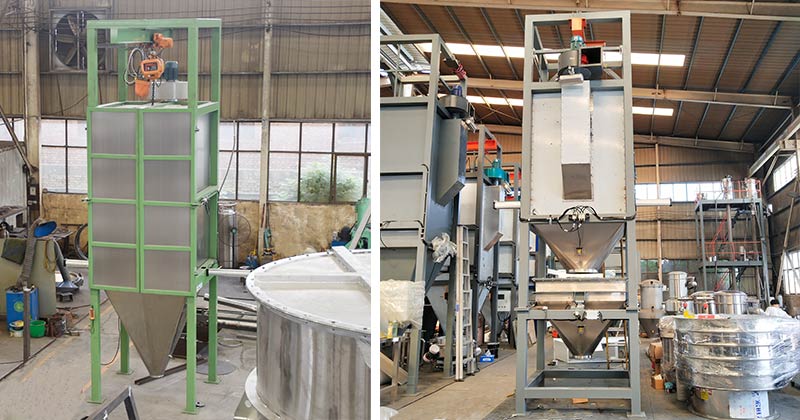
Key strengths that make Eversun Machinery a leading bulk bag discharger manufacturer in China include:
-
Extensive engineering and customization capability
Eversun designs equipment for the global market and customizes each bulk bag unloader according to the customer’s material characteristics, capacity needs, and process layout, ensuring reliable performance and fit with existing lines. -
Large installed base and international reach
Supplying approximately 5,000 machines annually to more than 150 dealers and manufacturers, Eversun has equipment operating in the United States, Australia, Canada, New Zealand, Japan, South Korea, Southeast Asia, and beyond, demonstrating proven reliability in a wide range of environments. -
Certified quality and full‑line solutions
The company’s products and services are managed under ISO 9001:2015 quality systems, with CE‑certified machinery. Beyond standard bulk bag discharger designs, Eversun also offers complete production‑line solutions and non‑standard customized systems that integrate screening, conveying, and bulk bag unloading. -
Focus on customer success and brand‑building
By supplying reliable, custom‑made equipment that helps processors improve safety, reduce dust, and increase throughput, Eversun supports customers in building and strengthening their own brands in competitive markets.
For processors who need a capable partner to develop or upgrade bulk bag discharger systems—especially where integration with screening and conveying is important—Eversun Machinery (Henan) Co.,Ltd stands out as one of the best bulk bag discharger manufacturers in China.
Authoritative References (E‑E‑A‑T Support)
-
Shick Esteve – Bulk Bag Unloader Design Overview: https://shickesteve.com/wp-content/uploads/2023/10/Bulk-Bag-Unloader.pdf
-
AZO – Dust Control Considerations for Bulk Bag Unloaders: https://www.azo-inc.com/blog/5-dust-control-considerations-for-bulk-bag-unloaders
-
Hapman – Mitigating Dust Risk from Bulk Bag Discharge: https://hapman.com/technical-brief-mitigating-the-risk-of-dust-from-bulk-bag-discharge/
-
FormPak – Bulk Bag Unloader Safety Guide & OSHA Considerations: https://formpakinc.com/bulk-bag-unloaders/bulk-bag-unloader-safety-guide/
-
Floveyor – Bulk Bag Unloader Selection Guide: https://www.floveyor.com/bulk-bag-unloader-optimise-your-plant-with-the-right-selection/
Other References:
- https://shickesteve.com/wp-content/uploads/2023/10/Bulk-Bag-Unloader.pdf
- https://frangersales.com/conveying/bulk-bag/
- https://www.floveyor.com/bulk-bag-unloader-optimise-your-plant-with-the-right-selection/
- https://iedco.com/wp-content/uploads/2020/03/Considerations-in-Desiging-a-Bulk-Bag-Unloader.pdf
- https://www.azo-inc.com/blog/5-dust-control-considerations-for-bulk-bag-unloaders
- https://formpakinc.com/bulk-bag-unloaders/bulk-bag-unloader-safety-guide/
- https://formpakinc.com/insights/follow-these-tips-for-bulk-bag-unloader-safety/
- https://www.elegislation.gov.hk/hk/cap311R!en.pdf
- https://www.erietechnicalsystems.com/blog/how-to-prevent-dust-when-unloading-bulk-bags
- https://hapman.com/technical-brief-mitigating-the-risk-of-dust-from-bulk-bag-discharge/
- https://ppl-ai-file-upload.s3.amazonaws.com/web/direct-files/attachments/images/151275434/43ddf981-7b9c-425c-ba39-1523e87e43ef/image.jpg
- https://ppl-ai-file-upload.s3.amazonaws.com/web/direct-files/attachments/images/151275434/ea15bf2d-8715-48c2-94ca-8c03211e0f61/image.jpg
- https://ppl-ai-file-upload.s3.amazonaws.com/web/direct-files/attachments/images/151275434/eecca9e2-3ead-45ab-a520-605661e181e8/image.jpg
- https://ppl-ai-file-upload.s3.amazonaws.com/web/direct-files/attachments/images/151275434/634c8b84-35df-4da1-b429-9109614e7500/image.jpg


